
The UK's Energy Savings Opportunity Scheme doesn't have to feel like a tax on your time. We guide qualifying organisations through Phase 4, from eligibility check to notification, with plain English, practical recommendations, and measurable savings.
ESOS is the UK's mandatory energy audit scheme. Each Phase lasts 4 years and for every phase qualifying organisations must measure their energy use, identify cost-effective savings, and prove a progress report to the Environment Agency.
The premise is simple: large organisations use a lot of energy, and most of them could use less if they knew where to look. ESOS forces a structured look at total energy consumption across buildings, transport and industrial processes, then flags the opportunities with the best payback.
Phase 4 has sharper teeth than previous rounds. Tighter audit quality requirements, mandatory action plans, and public disclosure of energy intensity metrics. It's no longer a tick-box exercise.
The aim is not paperwork. Done well, an ESOS assessment typically surfaces 7–22% in recoverable energy costs across an estate. We frame it as an investment, not an obligation.
You qualify for ESOS if, on 31 December 2026, your UK organisation (or corporate group) meets either of these thresholds, or both parts of the financial test combined.
Full-time equivalents across your UK operations. Meet this alone, and ESOS applies.
& an annual balance sheet total in excess of £38 million.
We've run this process enough times to make it predictable. Here's what the journey looks like when we run it for you. Roughly 12–16 weeks end to end, depending on estate complexity.
We confirm your qualification against the Phase 4 thresholds, define the corporate boundary (subsidiaries, JVs, franchises), and agree the sampling approach, saving audit days without compromising the 95% energy coverage rule.
We collate 12 months of verifiable energy data. Electricity, gas, fuel oil, transport fuel and any on-site generation. Where data is missing, we tell you exactly what to request from whom.
Kiro personally leads audits at representative sites. Lighting, HVAC, compressed air, process heat, BMS set-points, refrigeration, building fabric, every kilowatt gets examined for practical savings.
You get a ranked list of cost-saving measures with capex, annual saving, payback period and carbon impact. The mandatory Phase 4 action plan slots in as a natural output, not an afterthought.
Lead assessor sign-off, a board-ready summary pack, and notification to the Environment Agency via the MESOS portal. Phase 4's new disclosure requirements handled end to end.

Kiro Tamer sits on both of the UK's accredited ESOS Lead Assessor registers, ISEP and EMA. That combined credential is held by a minority of practising assessors in the country, and it means your submission clears the Environment Agency's evidence bar without round-trips.
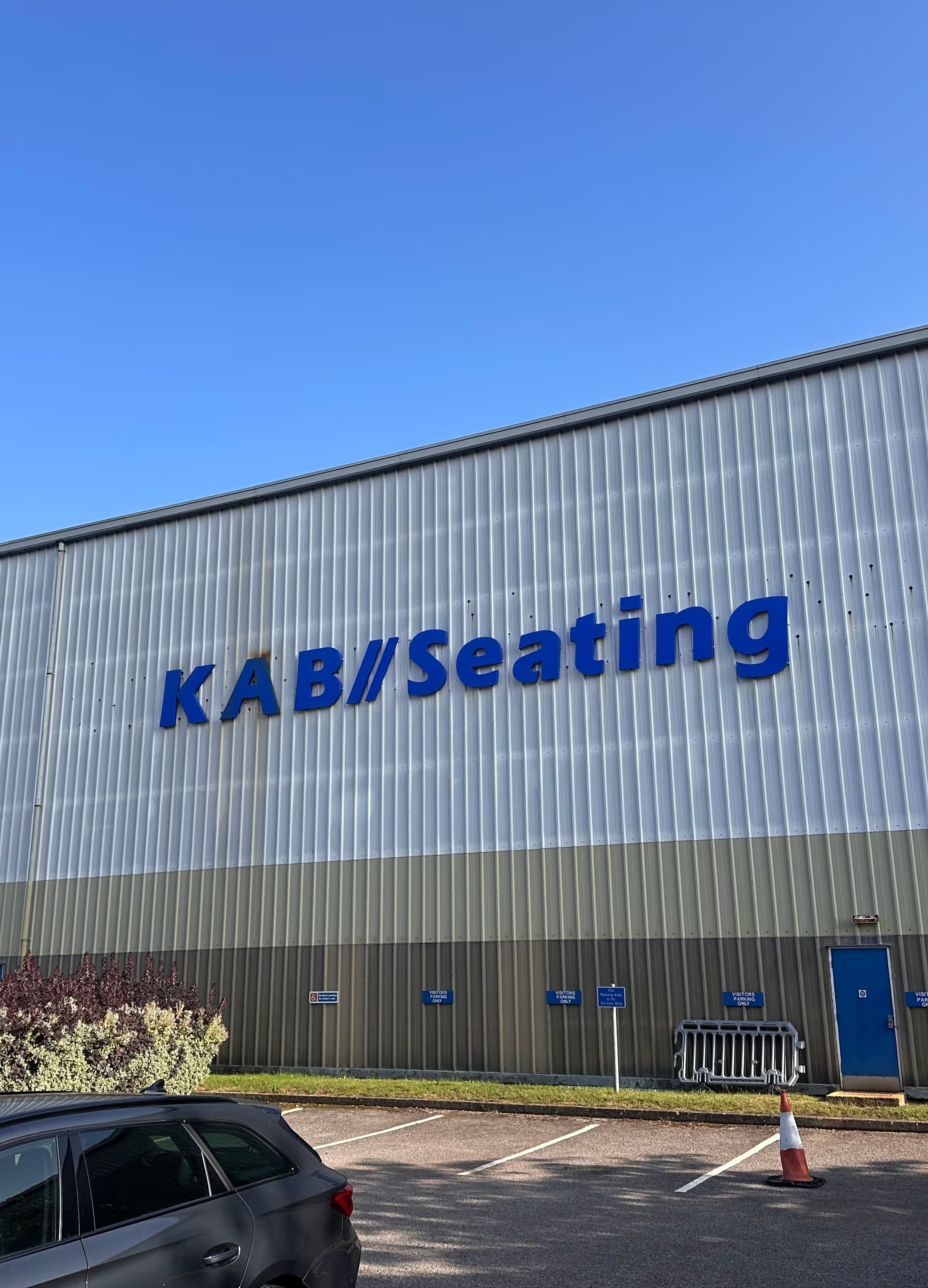
A UK manufacturer navigating Phase 3 without pausing production. The engagement that became our template for Phase 4.
The Environment Agency publishes a non-compliant organisations list every phase. Phase 4 introduces enhanced scrutiny of audit quality, not just whether you notified on time, but whether the underlying work was done to standard.
KEES is headquartered in Brighton and works the length of the country. From manufacturing sites in the North East to London offices and data centres in the South. All engagements are lead-assessed by Kiro; site visits are scheduled tightly to minimise travel overhead.
The questions we get most often from directors and sustainability leads weighing up their Phase 4 compliance options.
The Environment Agency can issue a civil penalty of up to £50,000 for missing the notification deadline, plus £500 per day of continuing non-compliance (capped at £5,000). Beyond the fine, non-compliant organisations are named on a public register. A reputational cost that often exceeds the financial one.
Yes. A fully certified ISO 50001 energy management system covering 100% of your energy consumption can serve as a complete route to ESOS compliance, without a separate audit. Kiro is accredited as both an ESOS Lead Assessor and an ISO 50001 Lead Auditor.
Typically 12–16 weeks from kick-off to notification for a mid-sized organisation with a handful of sites. The biggest variables are data availability and site access windows.
Phase 4 introduces mandatory action plans, public disclosure of energy intensity metrics, and stricter audit quality standards.
Probably. ESOS applies at the “highest UK parent” level, if your group as a whole meets the thresholds, all UK subsidiaries are swept in.
It scales with the size of your estate and the complexity of your energy profile. We quote a fixed fee after the eligibility call.
A no-pitch eligibility call with Kiro. We'll map your group structure against the Phase 4 thresholds, flag the likely audit scope, and tell you whether ESOS actually applies, before you spend a pound.